Death Is Hilarious
My parents live on the St. Lawrence River, the seaway through which all the cargo gathered in the Great Lakes travels to the Atlantic Ocean. When you sit on their front porch in the evening, you can watch the sun set on America. The sky goes grey around you, but the southern shoreline stays brightly lit. It’s like looking into another world. Peering through a pane of glass to someone who can neither see nor hear you, and doesn’t quite yet know the day is done.
I’m at a writer’s retreat in the summer of 2022. The first time my friends and I have been together indoors in over two years. Mom and Dad have left us their house with its ocean-bound views for the weekend. We talk about what it’s been like. Stories we’ve shared over Zoom and standing six feet apart on someone’s lawn. Now we share them huddled together, watching the sky turn grey and gold.
Someone says something about how Death must have been very busy the last few years. Illness, age, injury. Lives end every day. And now there are more. All the people who fought COVID and lost.
And I—never one to let a dark moment stay somber—said “I bet you Death missed a couple meeting invites in the last two years.”
There have to have been a few. People who were teetering on the brink. The doctors weren’t quite sure if they’d stay or go. Today. No, wait, tomorrow. The ending kept getting rescheduled and somewhere along the way, Death forgot to log into Outlook and missed the update. Dying is so unpredictable. You log out at 5 pm on Friday, then log back in on Monday to find out Agnes finally went on Saturday afternoon, and no one let you know. If I were Death, I would be pissed. I have KPIs to hit and Agnes is making it hard.
That plot bunny wouldn’t leave me alone. We had been surrounded by death for two years. And I had been grieving longer.
On October 1, 2018, my Nana couldn’t get out of bed. Two days later, my mom called me, teary, and said Nana would be going to oncology in Kingston. Then she called back the next day and said there was a new plan. Nana had already lived more than 86 years. She’d had a long marriage. Children, grandchildren and even a few great grandkids. Family dinners with her legendary roast beef. Pea soup and plum jam recipes carefully passed down. She’d been a widow for 22 years. She was good. She was done.
By October 16, she was gone. There was a new program in Canada, Medical Assistance in Dying (or MAID). She’d heard about it on the CBC. She was ready. She picked the date and time and said goodbye.
Here’s the thing. Nana with cancer in the hospital? That’s sad. People tell you they’re so sorry. They ask if you need anything. How are you doing?
Nana with cancer in the hospital and she’s dying on Tuesday at 2 pm? It’s kinda funny. Or at least, the shocked look on people’s faces, when they ask how you’re doing and you say, “I’m okay. Just waiting for Tuesday. 2 pm. Everyone is coming.” Like it’s a piano recital. The can’t-miss event of the social season. Yeah. The look on people’s faces is pretty funny.
Death has received the meeting invite, has blocked off the time in their calendar and will be ready to go on Tuesday at 2. Maybe 2:15 if Aunt Lois gets stuck in traffic.
So four years later, as we were watching the sunset and I said “Death must have missed a few meeting invites” I wasn’t talking in hypotheticals. I was talking about Nana. I was talking about the bureaucracy of dying. The paperwork and signatures, the waiting periods, the phone calls, the endless back and forth with faceless institutions who can see the account has been closed and the final pension cheque was never deposited, but they’ll still need it sent back to them, like a slip of paper with a dead lady’s name on it is more important than the feelings of a grieving family who just lost its matriarch.
You have to laugh, because eventually you run out of tears to cry.
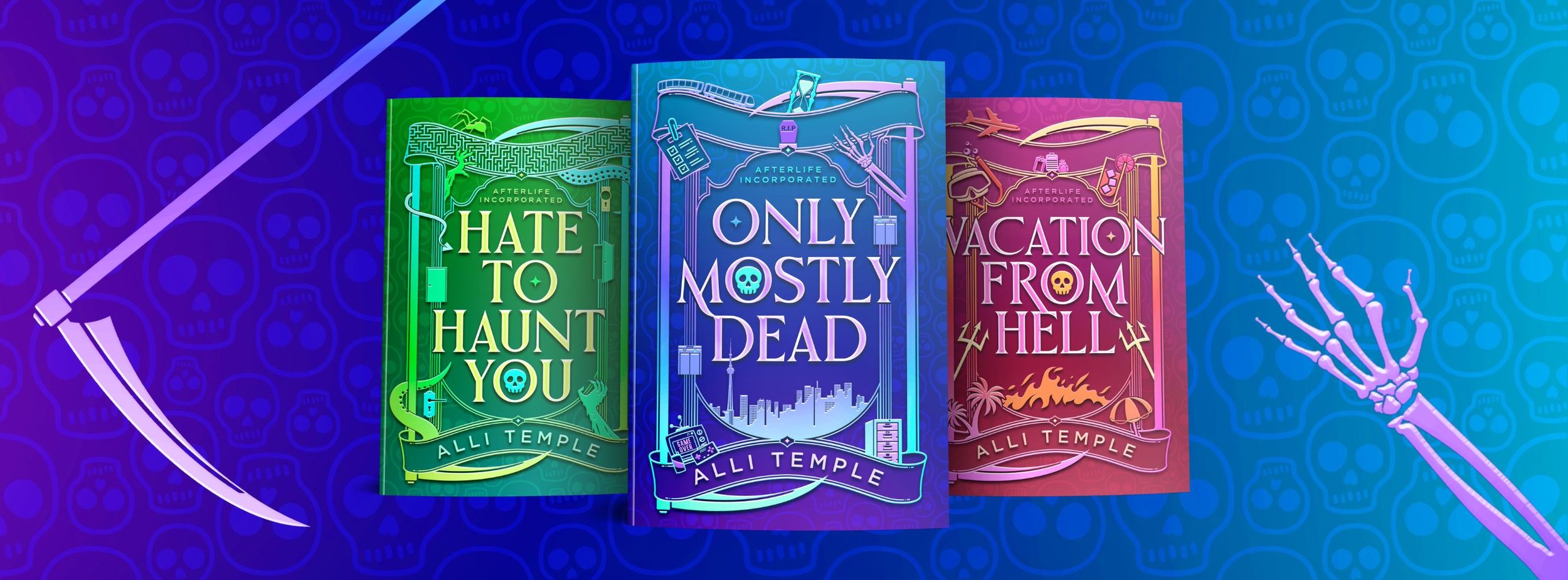
Afterlife Incorporated isn’t a series about grief. It’s really more about life. It’s about how hard we struggle, just to get buried in paperwork, even when we’re gone and our loved ones have to unbury themselves while dealing with a system that has never quite figured out how these last steps should go.
Death isn’t mysterious. It’s more of the same. Procedures. Waiting games. Never quite having enough words to say what you really mean, even with time running out. It’s also orange cats (the question of who would take Nana’s anxious shih tzu was a multi-generational debate), emails that get sent and never replied to, things that seemed so important until you can’t leave your house or hug your friends. Until the only thing left is to watch the sunset and laugh.
Nana’s last words were supposed to be “Thank you all for being here.”
But then the doctor said, “We’ll start with a sedative. You might snore a little.”
And her last words became, “Oh no. I never snore.”
And just like that, Death showed up exactly when it was supposed to.